


How Automated Payroll Software Eliminates Salary Errors and Saves Time

The average Indian SME running payroll manually makes between 3 and 8 errors per month. Some are minor. Some are serious—an incorrect TDS computation that triggers a tax notice. And some are invisible until an audit finds them years later. The root cause in every case is the same: a process that depends on humans to remember the right numbers and apply them correctly every time.

Payroll software in India replaces that dependency with a system that applies the correct rules automatically, based on each employee’s profile, attendance data, and applicable statutory requirements. The errors do not just decrease. They are structurally eliminated.

Why Do Salary Errors Happen in Manual Payroll?

Calculation errors

Salary components—basic pay, HRA, special allowance and overtime—are calculated in columns that reference each other. A single formula error in one cell propagates incorrectly across every employee in that category. With 40 employees and a missed bracket in a formula, 40 people receive the wrong salary.

Statutory rate errors

TDS rates change with income tax slabs and budget updates. Professional tax slabs vary by state and are revised periodically. PF thresholds, ESIC wage ceilings, and LWF contribution schedules each have their own update cycles. A payroll spreadsheet does not update itself. The person running payroll has to remember to update it every time.

Attendance reconciliation errors

Salary deductions for unpaid leave depend on accurate attendance data. If attendance is collected manually, errors in the source data produce errors in the deduction. By the time the wrong payslip reaches the employee, the source of the error is difficult to trace.

What Automated Payroll Software Does Differently?

Rule-based calculation engine

Every salary component is defined as a rule, not a formula in a cell. Basic pay is a percentage of CTC. HRA is a percentage of basic. Overtime is calculated at the applicable rate. These rules apply consistently to every employee, every month, without anyone having to remember or re-enter them.

Automatic statutory updates

When the government revises income tax slabs, the TDS calculation in a good payroll automation platform updates automatically. Professional tax tables are maintained state-wise. PF and ESIC thresholds are pre-configured and flagged when regulatory changes require an update.

Attendance-payroll integration

When attendance management and payroll are in the same system, attendance data flows directly into pay calculations. There is no manual transfer, no spreadsheet lookup, and no reconciliation step where errors accumulate.

The Real Cost of Payroll Errors for Salaried Businesses

  • Direct cost: Corrections and reconciliations take 30 to 90 minutes per error. At 5 errors per month, that is 2 to 7 hours of payroll team time spent fixing what should not have been broken.
  • Compliance cost: An incorrect TDS computation triggers an intimation from the income tax department. Responding to and correcting the filing typically costs Rs 5,000 to Rs 20,000 per correction.
  • Employee trust cost: An employee who receives the wrong salary, even once, begins to distrust the payroll process. Among salaried employees, payroll reliability is one of the top three factors in job satisfaction.
  • Management time cost: Payroll disputes escalate through HR, finance, and sometimes founders. Each escalation consumes management attention that should go toward higher-value work.

How EyeQHR Handles Salaried Payroll End-to-End?

  • Salary structure builder: Define earnings and deduction heads once. The system calculates every component from CTC on every payroll run.
  • TDS management: Employee declarations are captured at the start of the year. TDS is computed monthly and adjusted dynamically through the year.
  • Statutory deductions: PF, ESIC, professional tax, and LWF are calculated automatically based on each employee’s eligibility.
  • Payslip generation: Payslips are generated for every employee after approval. Employees download them from the self-service portal.
  • Compliance file generation: ECR files for EPFO, ESIC contribution data, and Form 16 are generated from the same payroll run.

Frequently Asked Questions

Q1. How does payroll software handle different salary structures for different employee grades?

A1. Payroll software allows you to create multiple salary templates for different roles or grades. When an employee is assigned a template, all calculations apply from their joining date automatically.

Q2. Can payroll software handle salary revisions mid-year?

A2. Yes. Revised salary structures are applied from the effective date. The system prorates the difference for the month of revision and adjusts TDS projections for the remainder of the financial year.

Q3. How does automated payroll handle employees with variable pay?

A3. Variable pay components like performance bonuses or commissions are entered as input variables each month. The system adds them to fixed components and applies the correct statutory deductions on the combined gross.

Q4. Does payroll software generate Form 16?

A4. Yes. Form 16 is generated from the cumulative TDS data for the full financial year. Employees receive it through the self-service portal. The data matches the TDS returns filed with the income tax department.

Q5. What happens if there is a change in income tax rules during the year?

A5. Reputable payroll platforms update tax computation rules when budget changes are notified. TDS for the remaining months is recalculated automatically based on the revised rules.

Conclusion

Payroll errors are not inevitable. They are the predictable result of a manual process applied to a problem that has too many variables to manage reliably by hand. Payroll software in India solves this at the structural level. Errors stop, compliance risk drops, and a process that used to take a full day now takes a few hours.

Related Posts

How Small and Mid-Sized Businesses Can Save Time and Costs with an All-in-One HRMS?

How Small and Mid-Sized Businesses Can Save Time and Costs with an All-in-One HRMS?

Running a small or mid-sized business in India means wearing many hats. The founder is often the sales head, the…
Read More

How Automated Payroll Software Eliminates Salary Errors and Saves Time

How Automated Payroll Software Eliminates Salary Errors and Saves Time

The average Indian SME running payroll manually makes between 3 and 8 errors per month. Some are minor. Some are…
Read More

I’m the Founder, So Why Am I Still Doing HR? Here’s What It Cost Me

I’m the Founder, So Why Am I Still Doing HR? Here’s What It Cost Me

I started managing HR myself because it seemed simple. Twelve employees. A salary sheet. A leave tracker. Some TDS calculations…
Read More

10 Signs Your Business Has Outgrown Excel for HR and Payroll Management

10 Signs Your Business Has Outgrown Excel for HR and Payroll Management

Every business starts on Excel. It is free, familiar, and flexible enough for a team of five. But there comes…
Read More
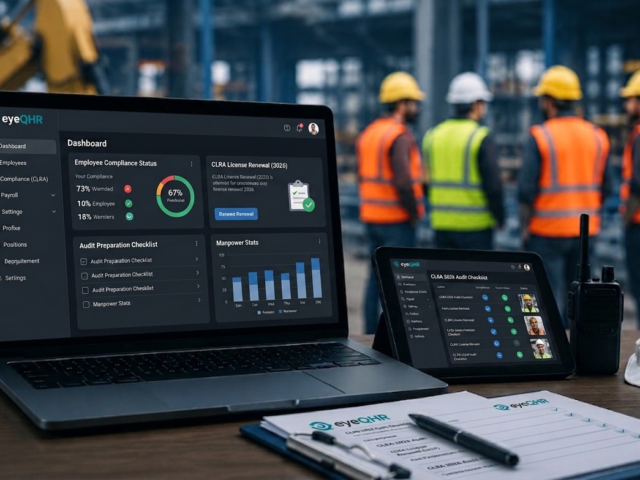
CLRA Compliance in 2026: The Practical Checklist Every Manpower Contractor Must Follow Before the Next Inspection

CLRA Compliance in 2026: The Practical Checklist Every Manpower Contractor Must Follow Before the Next Inspection

A labour inspector can walk into any client site where your workers are deployed. Today, without notice. What they find…
Read More

Payroll Software for Contract Workers: How Bulk Processing Works and Why It Matters for Compliance

Payroll Software for Contract Workers: How Bulk Processing Works and Why It Matters for Compliance

If your payroll team spends three days every month calculating wages for 200 contract workers in a spreadsheet, the problem…
Read More
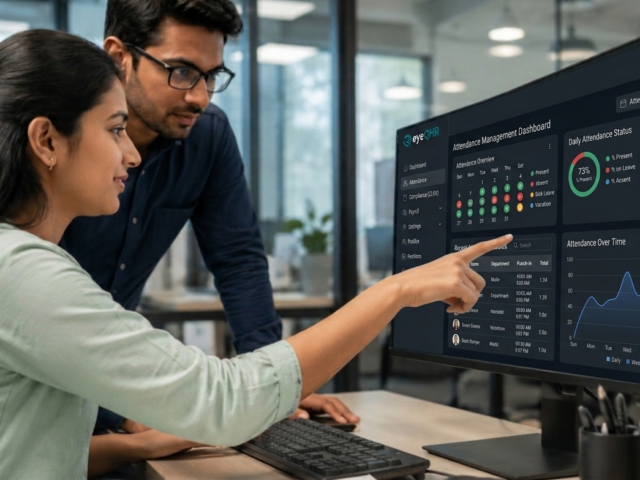
Attendance Management for Manpower Companies: Why Your Current System is Failing You and What to Do About It

Attendance Management for Manpower Companies: Why Your Current System is Failing You and What to Do About It

A security company in Jaipur was managing attendance for 340 guards across 22 client sites using WhatsApp messages and paper…
Read More

Why Contract Labour Management Software is Non-Negotiable for India’s Manpower Industry in 2026

Why Contract Labour Management Software is Non-Negotiable for India’s Manpower Industry in 2026

If you run a manpower company, staffing agency, or security firm in India, you already know that managing contract labour…
Read More

Attendance Management for Manpower Companies: Why Your Current System is Failing You and What to Do About It

Attendance Management for Manpower Companies: Why Your Current System is Failing You and What to Do About It

A security company in Jaipur was managing attendance for 340 guards across 22 client sites using WhatsApp messages and paper…
Read More
Daily Wage and Overtime Calculation for Contract Workers in India: Complete Formula Guide

Daily Wage and Overtime Calculation for Contract Workers in India: Complete Formula Guide

Calculating daily wages and overtime for contract workers sounds straightforward until you actually sit down to do it. The daily…
Read More
Why Contract Labour Management Software is Non-Negotiable for India’s Manpower Industry in 2026

Why Contract Labour Management Software is Non-Negotiable for India’s Manpower Industry in 2026

If you run a manpower company, staffing agency, or security firm in India, you already know that managing contract labour…
Read More
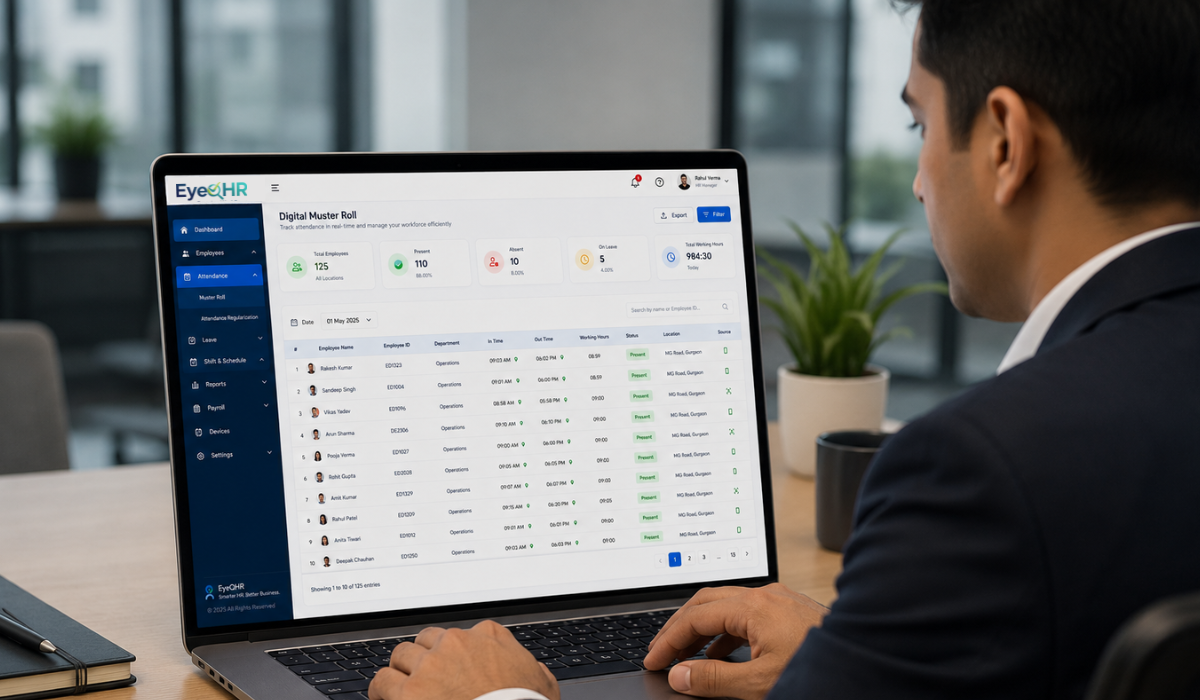
Muster Roll Format India: What It Is, What Goes in It, and How to Maintain It Correctly

Muster Roll Format India: What It Is, What Goes in It, and How to Maintain It Correctly

Every manpower company, labour contractor, and staffing agency that deploys workers under the Contract Labour (Regulation and Abolition) Act, 1970…
Read More

PF and ESI for Contract Workers in India: A Practical Guide for Manpower Companies

PF and ESI for Contract Workers in India: A Practical Guide for Manpower Companies

Provident Fund and ESIC are among the most commonly misunderstood compliance obligations for manpower companies. Not because the rules are…
Read More
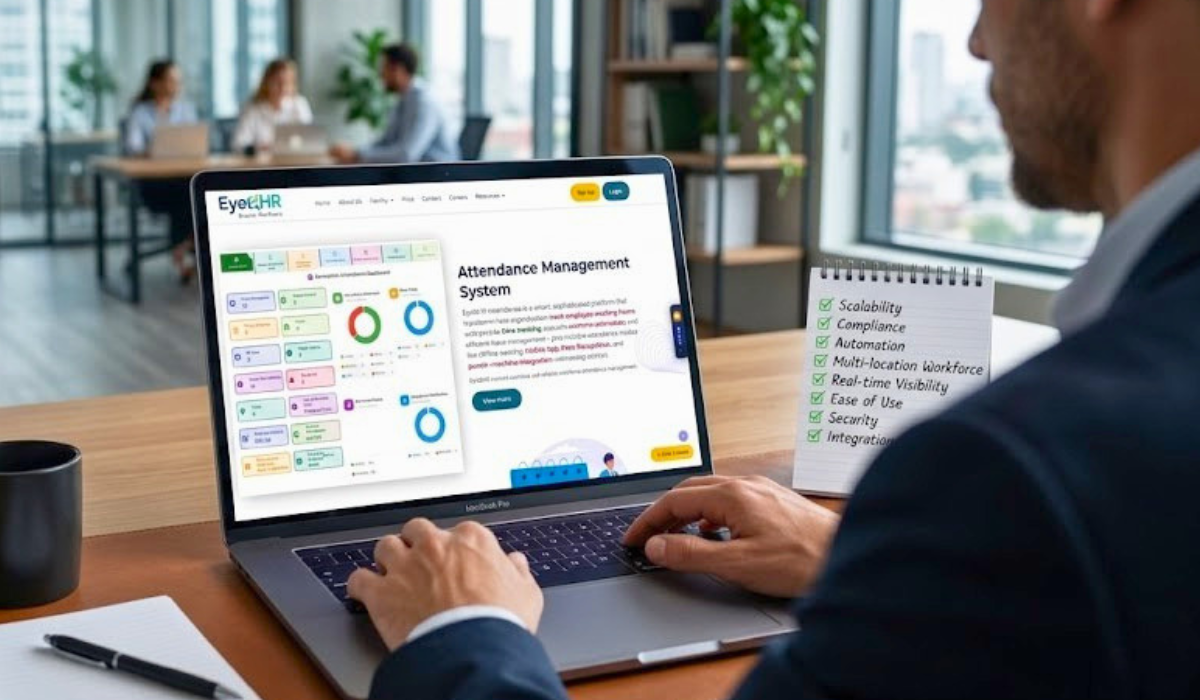
What to Look for in an HRMS for Manpower Companies India 2026: The Complete Buyer’s Guide

What to Look for in an HRMS for Manpower Companies India 2026: The Complete Buyer’s Guide

Finding the right HRMS for a manpower company in India is a very different exercise from choosing HR software for…
Read More

How to Run Bulk Payroll for Contract Workers in India: A Step-by-Step Guide

How to Run Bulk Payroll for Contract Workers in India: A Step-by-Step Guide

Running payroll for a fixed workforce of salaried employees is relatively straightforward. Running bulk payroll for contract workers is a…
Read More

Field Employee Attendance Tracking: A Complete Guide for Manpower, Security, and Facility Management Companies

Field Employee Attendance Tracking: A Complete Guide for Manpower, Security, and Facility Management Companies

Ask any HR manager at a manpower company what their most time-consuming problem is, and attendance will come up in…
Read More

Minimum Wage India 2026: State-Wise Updated Rates and Daily Wage Calculation Guide

Minimum Wage India 2026: State-Wise Updated Rates and Daily Wage Calculation Guide

Minimum wage compliance is one of the most consistent pain points for manpower companies, staffing agencies, and any business that…
Read More

CLRA Compliance Checklist for Manpower Companies in India: What You Must Get Right in 2026

CLRA Compliance Checklist for Manpower Companies in India: What You Must Get Right in 2026

Every manpower company in India that deploys contract workers has legal obligations under the Contract Labour (Regulation and Abolition) Act,…
Read More