


How Small and Mid-Sized Businesses Can Save Time and Costs with an All-in-One HRMS?

Running a small or mid-sized business in India means wearing many hats. The founder is often the sales head, the operations manager, and the HR department simultaneously. Every rupee spent on administration is a rupee not available for growth. Every hour spent on payroll is an hour not spent on customers.

An all-in-one HRMS for SMEs changes this equation. Instead of separate tools for payroll, attendance, leave, and compliance—or worse, separate spreadsheets for each—an integrated platform handles all of them in one place. Here is what that actually means for a business running 15 to 200 employees.

The SME HR Problem Is Different From the Enterprise HR Problem

Large enterprises have dedicated HR teams, compliance specialists, and IT departments. An SME has none of that. The HR function is handled by a founder, an admin manager, or a finance executive who also does five other things. HRMS for SMEs is a specific product category—not just a smaller version of enterprise HR software. It has to be self-configuring, intuitive, and operational in days, not months.

What Does an All-in-One HRMS Actually Include?

Payroll management

Salary calculations, TDS deductions, PF and ESIC contributions, professional tax, and payslip generation — all handled automatically based on employee salary structures and attendance data. This eliminates the month-end payroll scramble and the compliance risk that comes with manual calculations.

Attendance management

Mobile attendance, GPS geo-fencing, biometric integration, or face recognition—employees mark attendance from wherever they work. The system captures data in real time, applies shift rules and overtime calculations, and feeds the result directly into payroll.

Leave management

Employees apply for leave online. Managers approve with one tap. Leave balances update automatically and the approved days flow into payroll as deductions when applicable. The entire process has a structured workflow, an audit trail, and accurate balances.

Statutory compliance

PF, ESIC, TDS, professional tax, and LWF are calculated automatically on every payroll run. ECR files for EPFO and ESIC contribution reports are generated with one click. Compliance deadlines are tracked. Penalties from missed filings stop being a risk.

Employee self-service

Employees access their payslips, apply for leave, view attendance records, submit expense claims, and update personal details—all without involving HR. This single feature reduces HR query volume by 40 to 60 percent in most implementations.

Time and Cost Savings: What the Numbers Look Like

For an SME with 50 employees, here is what implementing an all-in-one HRMS for SMEs typically delivers:

Task Before HRMS After HRMS
Monthly payroll 2 to 3 days 2 to 3 hours
Attendance tracking 1 day manual entry Automatic, real-time
Leave management WhatsApp + manual Self-service portal
Compliance filing 4 to 6 hours + CA fees Auto-generated files
Payslip distribution 30 to 60 mins emailing Instant via portal

How Does HRMS Help SMEs Scale Without Adding HR Headcount?

The most important thing an HRMS for SMEs does is not reduce current costs. It is to make future growth manageable without proportional increases in HR headcount. When your team grows from 30 to 60 people, payroll complexity doubles. In a manual system, that means doubling payroll processing time or hiring another payroll person. In an automated system, the additional 30 employees add minimal processing time.

The compliance protection benefit

A company with 80 employees has mandatory PF, ESIC, TDS, professional tax, and potentially LWF obligations across multiple states. Managing these manually at that scale is not just difficult. It is a compliance liability waiting to materialize.

What to Look for in an HRMS for Your SME?

Indian statutory compliance built in: The platform should handle PF, ESIC, TDS, professional tax, and LWF without requiring separate integrations or manual updates.

  • Flexible attendance options: Mobile GPS, geo-fencing, biometric integration, and face recognition should all be available.
  • Quick implementation: An SME HRMS should be operational in 3 to 7 days. If a vendor quotes weeks or months, the product is not designed for your scale.
  • Employee self-service: This single feature dramatically reduces HR query volume and gives employees ownership of their own data.
  • Per-employee pricing: Cloud HRMS for SMEs is typically priced per employee per month. This makes it affordable at 15 employees and scales predictably as you grow.

Frequently Asked Questions

Q1. What is the difference between HRMS and payroll software?

A1. Payroll software handles salary calculations and statutory deductions. An HRMS includes payroll plus attendance, leave management, employee records, onboarding, exit management, and compliance. An all-in-one HRMS eliminates the need for separate tools.

Q2. How much does HRMS for SMEs cost in India?

A2. Cloud-based HRMS for Indian SMEs is typically priced between Rs 50 and Rs 250 per employee per month. For a 30-person team, that is Rs 1,500 to Rs 7,500 per month—typically recovered in the first month through time savings.

Q3. Can HRMS work for a business with employees in multiple states?

A3. Yes. A good HRMS handles multi-state payroll by applying the correct professional tax slabs and LWF rules for each state. Statutory compliance is managed state-wise.

Q4. Does implementing HRMS require IT support?

A4. Cloud-based HRMS platforms require no IT infrastructure. Setup involves configuring salary structures, adding employees, and connecting attendance inputs. Most SMEs complete this in 3 to 7 working days with vendor support.

Q5. Is HRMS suitable for businesses without an HR manager?

A5. This is exactly the use case most SME HRMS platforms are built for. The system automates the tasks that would otherwise require an HR manager.

Conclusion

For small and mid-sized businesses in India, an all-in-one HRMS for SMEs is a structural decision that changes how the business manages its most important resource—its people. The time saved, the compliance risk eliminated, and the scalability gained repay the investment within the first quarter.

Related Posts

How Small and Mid-Sized Businesses Can Save Time and Costs with an All-in-One HRMS?

How Small and Mid-Sized Businesses Can Save Time and Costs with an All-in-One HRMS?

Running a small or mid-sized business in India means wearing many hats. The founder is often the sales head, the…
Read More

How Automated Payroll Software Eliminates Salary Errors and Saves Time

How Automated Payroll Software Eliminates Salary Errors and Saves Time

The average Indian SME running payroll manually makes between 3 and 8 errors per month. Some are minor. Some are…
Read More

I’m the Founder, So Why Am I Still Doing HR? Here’s What It Cost Me

I’m the Founder, So Why Am I Still Doing HR? Here’s What It Cost Me

I started managing HR myself because it seemed simple. Twelve employees. A salary sheet. A leave tracker. Some TDS calculations…
Read More
10 Signs Your Business Has Outgrown Excel for HR and Payroll Management

10 Signs Your Business Has Outgrown Excel for HR and Payroll Management

Every business starts on Excel. It is free, familiar, and flexible enough for a team of five. But there comes…
Read More
CLRA Compliance in 2026: The Practical Checklist Every Manpower Contractor Must Follow Before the Next Inspection

CLRA Compliance in 2026: The Practical Checklist Every Manpower Contractor Must Follow Before the Next Inspection

A labour inspector can walk into any client site where your workers are deployed. Today, without notice. What they find…
Read More

Payroll Software for Contract Workers: How Bulk Processing Works and Why It Matters for Compliance

Payroll Software for Contract Workers: How Bulk Processing Works and Why It Matters for Compliance

If your payroll team spends three days every month calculating wages for 200 contract workers in a spreadsheet, the problem…
Read More
Attendance Management for Manpower Companies: Why Your Current System is Failing You and What to Do About It

Attendance Management for Manpower Companies: Why Your Current System is Failing You and What to Do About It

A security company in Jaipur was managing attendance for 340 guards across 22 client sites using WhatsApp messages and paper…
Read More

Why Contract Labour Management Software is Non-Negotiable for India’s Manpower Industry in 2026

Why Contract Labour Management Software is Non-Negotiable for India’s Manpower Industry in 2026

If you run a manpower company, staffing agency, or security firm in India, you already know that managing contract labour…
Read More

Attendance Management for Manpower Companies: Why Your Current System is Failing You and What to Do About It

Attendance Management for Manpower Companies: Why Your Current System is Failing You and What to Do About It

A security company in Jaipur was managing attendance for 340 guards across 22 client sites using WhatsApp messages and paper…
Read More
Daily Wage and Overtime Calculation for Contract Workers in India: Complete Formula Guide

Daily Wage and Overtime Calculation for Contract Workers in India: Complete Formula Guide

Calculating daily wages and overtime for contract workers sounds straightforward until you actually sit down to do it. The daily…
Read More
Why Contract Labour Management Software is Non-Negotiable for India’s Manpower Industry in 2026

Why Contract Labour Management Software is Non-Negotiable for India’s Manpower Industry in 2026

If you run a manpower company, staffing agency, or security firm in India, you already know that managing contract labour…
Read More
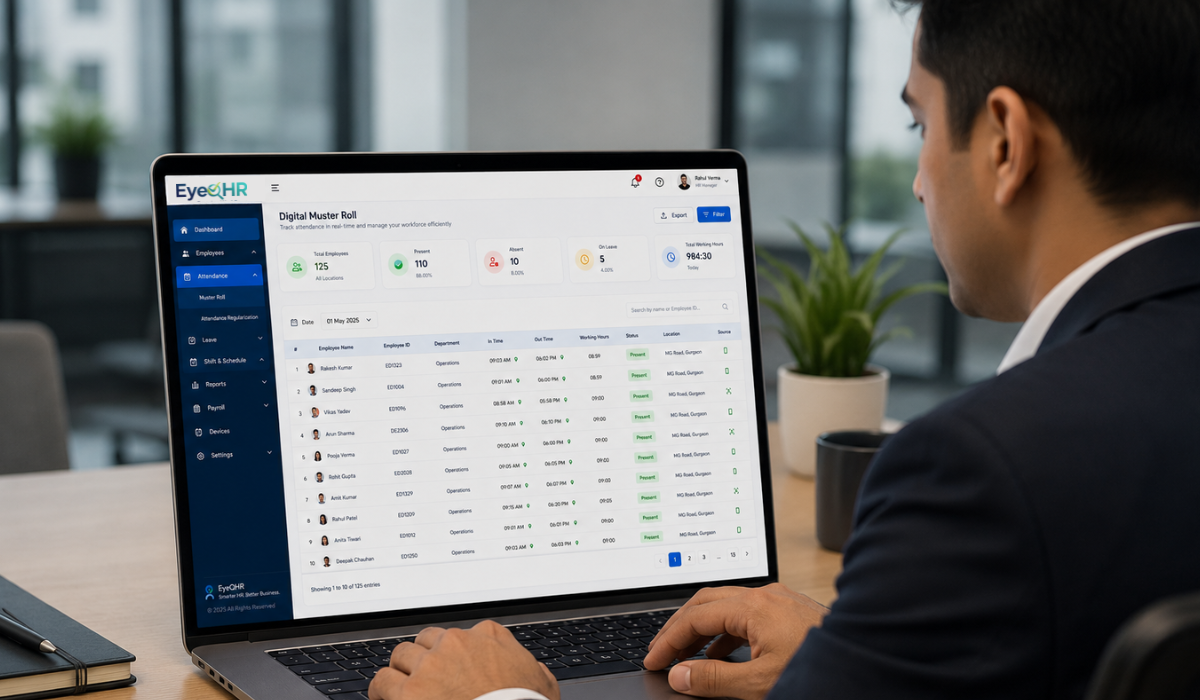
Muster Roll Format India: What It Is, What Goes in It, and How to Maintain It Correctly

Muster Roll Format India: What It Is, What Goes in It, and How to Maintain It Correctly

Every manpower company, labour contractor, and staffing agency that deploys workers under the Contract Labour (Regulation and Abolition) Act, 1970…
Read More

PF and ESI for Contract Workers in India: A Practical Guide for Manpower Companies

PF and ESI for Contract Workers in India: A Practical Guide for Manpower Companies

Provident Fund and ESIC are among the most commonly misunderstood compliance obligations for manpower companies. Not because the rules are…
Read More
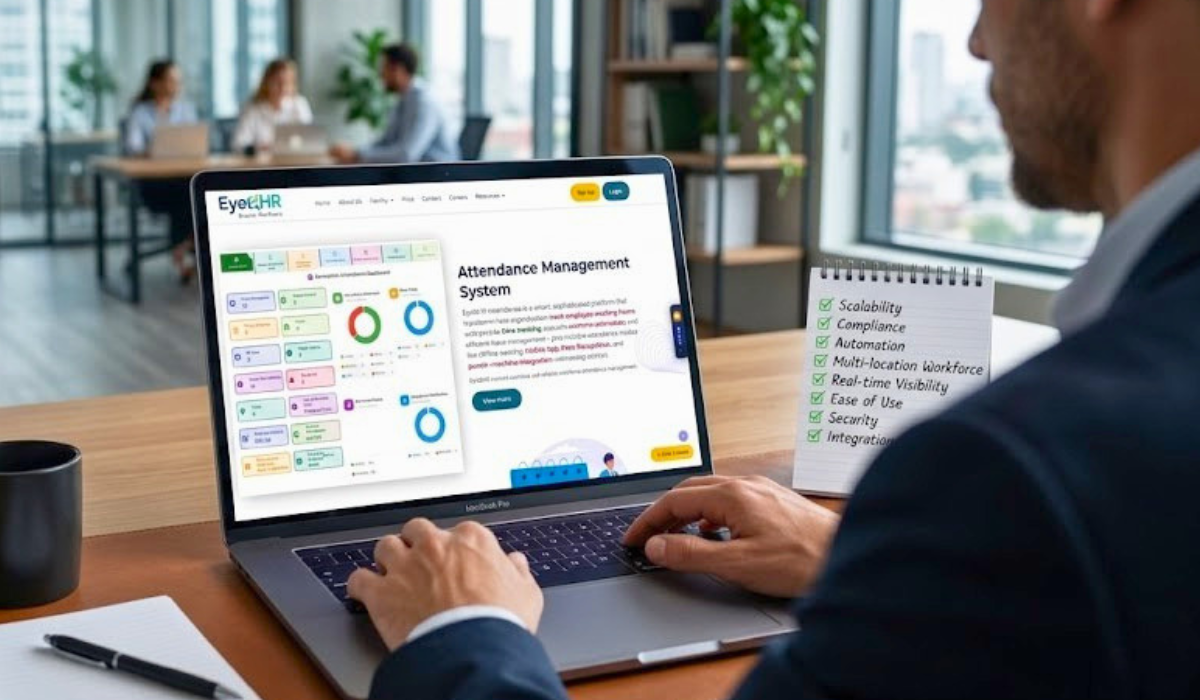
What to Look for in an HRMS for Manpower Companies India 2026: The Complete Buyer’s Guide

What to Look for in an HRMS for Manpower Companies India 2026: The Complete Buyer’s Guide

Finding the right HRMS for a manpower company in India is a very different exercise from choosing HR software for…
Read More

How to Run Bulk Payroll for Contract Workers in India: A Step-by-Step Guide

How to Run Bulk Payroll for Contract Workers in India: A Step-by-Step Guide

Running payroll for a fixed workforce of salaried employees is relatively straightforward. Running bulk payroll for contract workers is a…
Read More
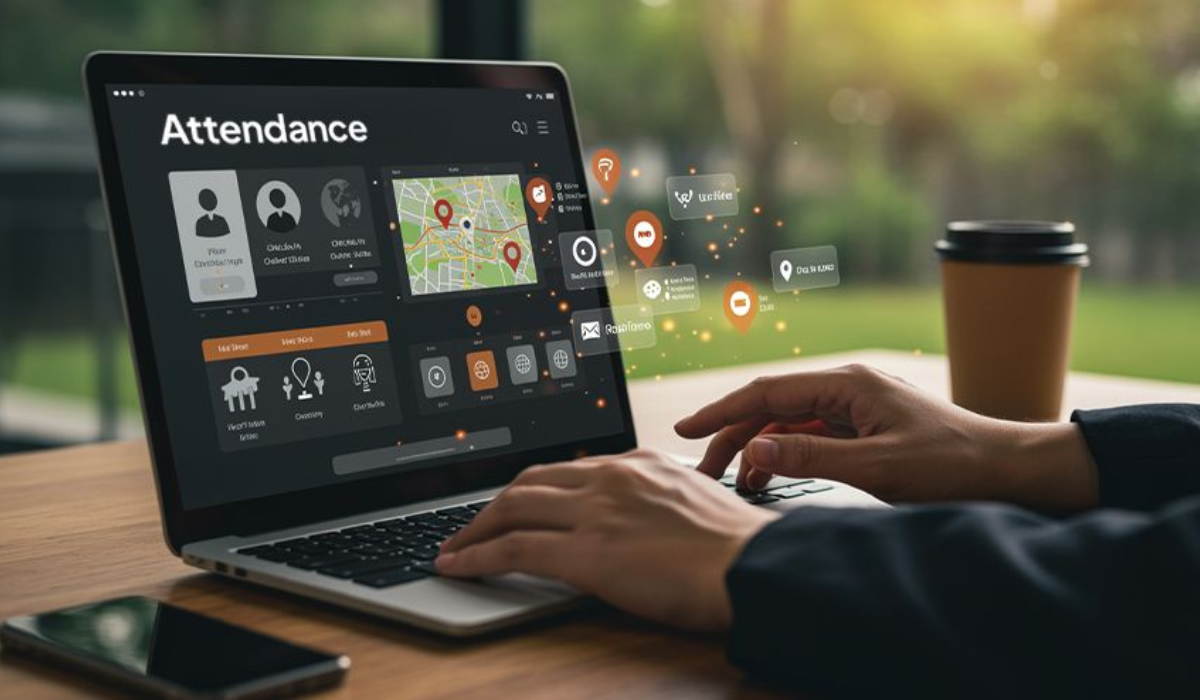
Field Employee Attendance Tracking: A Complete Guide for Manpower, Security, and Facility Management Companies

Field Employee Attendance Tracking: A Complete Guide for Manpower, Security, and Facility Management Companies

Ask any HR manager at a manpower company what their most time-consuming problem is, and attendance will come up in…
Read More

Minimum Wage India 2026: State-Wise Updated Rates and Daily Wage Calculation Guide

Minimum Wage India 2026: State-Wise Updated Rates and Daily Wage Calculation Guide

Minimum wage compliance is one of the most consistent pain points for manpower companies, staffing agencies, and any business that…
Read More

CLRA Compliance Checklist for Manpower Companies in India: What You Must Get Right in 2026

CLRA Compliance Checklist for Manpower Companies in India: What You Must Get Right in 2026

Every manpower company in India that deploys contract workers has legal obligations under the Contract Labour (Regulation and Abolition) Act,…
Read More

Type your paragraph here