


I’m the Founder, So Why Am I Still Doing HR? Here’s What It Cost Me

I started managing HR myself because it seemed simple. Twelve employees. A salary sheet. A leave tracker. Some TDS calculations every quarter. How complicated could it be?

Eighteen months later, I had spent an estimated 300 hours on HR tasks, received two compliance notices, processed three incorrect salary runs, and watched one of my best employees leave partly because of a payroll dispute that was entirely our fault. That is what HRMS for small businesses was solving, and I did not know it yet.

Why Founders End Up Managing HR?

It starts with necessity. In the early days, there was no HR team. The founder does everything. And because it works for three to five employees, the system never gets replaced. It just gets more complicated. By the time the business has 20 people, the founder is still doing the same tasks but spending three to four times as long on them. The HR software for startups’ decisions keeps getting deferred because it feels like a non-urgent cost. But the cost of deferral compounds every month.

The Real-Time Cost of Founder-Managed HR

Here is what a typical month looked like with 20 employees:

  • Payroll calculation: 6 to 8 hours
  • Attendance reconciliation: 3 to 4 hours
  • Leave tracking and approvals: 1 to 2 hours
  • PF and ESIC compliance: 2 to 3 hours
  • Employee queries and disputes: 2 to 3 hours
  • Onboarding and exit paperwork: 1 to 4 hours per event

Total: 15 to 20 hours per month. At founder billing rates, that is Rs 60,000 to Rs 80,000 worth of founder time going toward administrative work that could have been automated.

The opportunity cost no one talks about

Every hour spent on HR administration is an hour not spent on sales, product, or customer relationships. HRMS for small businesses pays for itself the moment you recalculate what that founder time is actually worth.

The Three Incidents That Changed My Mind

Incident 1: The payroll error that broke trust

In month seven, an error in the leave deduction formula meant eight employees received salaries Rs 800 to Rs 2,400 lower than what they were owed. The corrections were made in the next cycle. But two of those employees started looking for new jobs within 60 days. One left four months later. The replacement cost was Rs 1.8 lakh in recruiter fees alone.

Incident 2: The compliance notice

A missed PF ECR filing in February—because I was travelling for a customer meeting—arrived as a notice six weeks later. The penalty and interest combined were Rs 28,000. Accountant fees for responding added another Rs 12,000. Total cost of one missed monthly filing: Rs 40,000.

Incident 3: The leave dispute

One manager disputed her leave balance. My record said 12 days used. She said 9. There was no audit trail, no timestamped approval history and no system of record. We settled on 10 days. The unresolved ambiguity damaged the working relationship for months.

What HRMS for Small Business Actually Does?

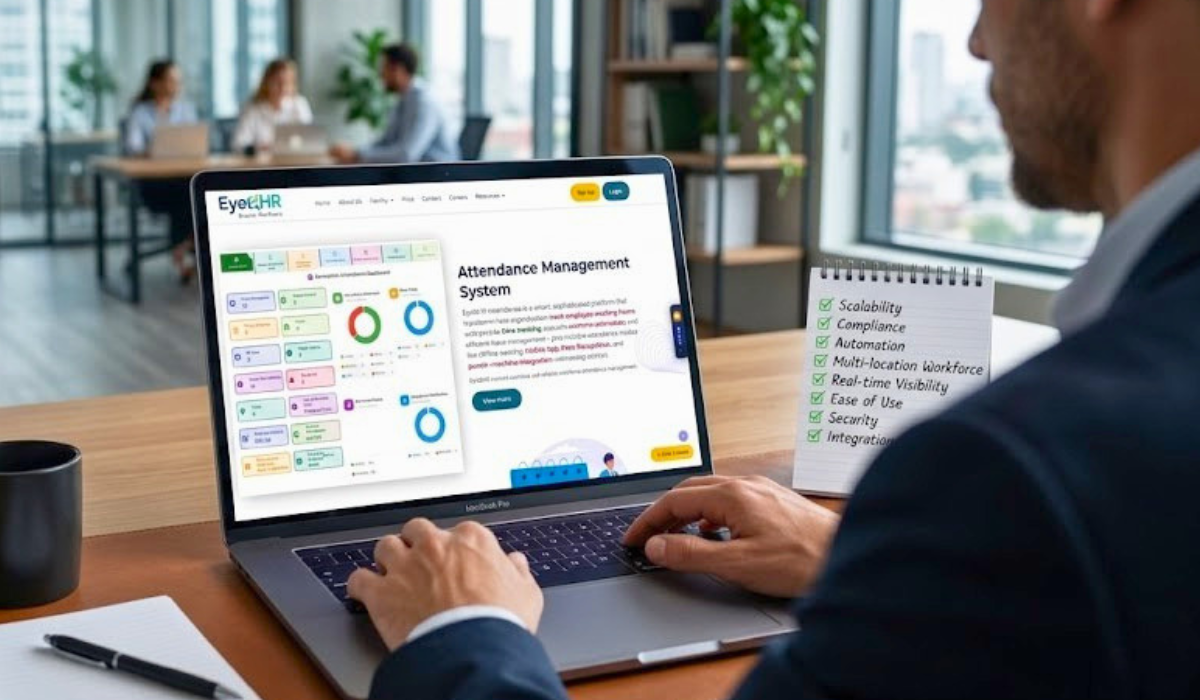
A purpose-built HRMS for small businesses like EyeQHR is designed for the 10-200 employee business that needs professional HR infrastructure without enterprise complexity.

  • Payroll: Salary calculations, statutory deductions, and payslip generation happen automatically based on attendance data. Month-end payroll takes 30 to 60 minutes instead of a full day.
  • Attendance: Mobile GPS, geo-fencing, biometric integration, or face recognition—employees mark attendance from wherever they work. No registers, no WhatsApp photos, no manual entry.
  • Leave management: Employees apply online. Managers approve from the app. Leave balances update automatically. The data flows into payroll.
  • Compliance: PF, ESIC, TDS, professional tax, and LWF are calculated correctly on every payroll run. ECR files and challans are generated automatically.
  • Employee records: All employee data, documents, and history in one searchable database.

When Is the Right Time to Implement HR Software?

The answer is when HR tasks are taking more than 5 hours of your month. At that point, the software pays for itself in founder time alone, before accounting for compliance risk and payroll error costs. For most founders, that threshold is between 10 and 15 employees.

Frequently Asked Questions

Q1. Can I use HR software without an HR manager?

A1. Yes. Platforms like EyeQHR are built for founders and business owners managing HR themselves. The interface is designed for non-HR professionals. Payroll runs in a few clicks. Attendance and leave are managed by employees and their managers directly through the system.

Q2. What is the minimum team size for HRMS to make sense?

A2. HR software typically makes financial sense from 8 to 10 employees. Above that, the time and error costs of manual HR start to outweigh the software cost within the first month.

Q3. Will HR software handle TDS and PF automatically?

A3. Yes. A purpose-built Indian HR platform calculates TDS under the applicable tax regime, PF on basic wages, and ESIC on gross wages for eligible employees.

Q4. Can HR software generate payslips for all employees?

A4. Yes. Payslips are generated automatically for every employee after each payroll run. Employees can download their own payslips through the self-service portal.

Q5. Is employee data secure in cloud HR software?

A5. Cloud HRMS platforms use encrypted storage, role-based access controls, and regular backups. Employee data is more secure in a purpose-built cloud platform than in an Excel file on a local hard drive.

Conclusion

Managing HR as a founder is not hands-on leadership. It is a sign the business has not built the systems it needs to scale. HRMS for small businesses is the infrastructure decision that lets founders stop being HR administrators and start being business builders.

Related Posts

How Small and Mid-Sized Businesses Can Save Time and Costs with an All-in-One HRMS?

How Small and Mid-Sized Businesses Can Save Time and Costs with an All-in-One HRMS?

Running a small or mid-sized business in India means wearing many hats. The founder is often the sales head, the…
Read More

How Automated Payroll Software Eliminates Salary Errors and Saves Time

How Automated Payroll Software Eliminates Salary Errors and Saves Time

The average Indian SME running payroll manually makes between 3 and 8 errors per month. Some are minor. Some are…
Read More

I’m the Founder, So Why Am I Still Doing HR? Here’s What It Cost Me

I’m the Founder, So Why Am I Still Doing HR? Here’s What It Cost Me

I started managing HR myself because it seemed simple. Twelve employees. A salary sheet. A leave tracker. Some TDS calculations…
Read More
10 Signs Your Business Has Outgrown Excel for HR and Payroll Management

10 Signs Your Business Has Outgrown Excel for HR and Payroll Management

Every business starts on Excel. It is free, familiar, and flexible enough for a team of five. But there comes…
Read More
CLRA Compliance in 2026: The Practical Checklist Every Manpower Contractor Must Follow Before the Next Inspection

CLRA Compliance in 2026: The Practical Checklist Every Manpower Contractor Must Follow Before the Next Inspection

A labour inspector can walk into any client site where your workers are deployed. Today, without notice. What they find…
Read More

Payroll Software for Contract Workers: How Bulk Processing Works and Why It Matters for Compliance

Payroll Software for Contract Workers: How Bulk Processing Works and Why It Matters for Compliance

If your payroll team spends three days every month calculating wages for 200 contract workers in a spreadsheet, the problem…
Read More
Attendance Management for Manpower Companies: Why Your Current System is Failing You and What to Do About It

Attendance Management for Manpower Companies: Why Your Current System is Failing You and What to Do About It

A security company in Jaipur was managing attendance for 340 guards across 22 client sites using WhatsApp messages and paper…
Read More

Why Contract Labour Management Software is Non-Negotiable for India’s Manpower Industry in 2026

Why Contract Labour Management Software is Non-Negotiable for India’s Manpower Industry in 2026

If you run a manpower company, staffing agency, or security firm in India, you already know that managing contract labour…
Read More

Attendance Management for Manpower Companies: Why Your Current System is Failing You and What to Do About It

Attendance Management for Manpower Companies: Why Your Current System is Failing You and What to Do About It

A security company in Jaipur was managing attendance for 340 guards across 22 client sites using WhatsApp messages and paper…
Read More
Daily Wage and Overtime Calculation for Contract Workers in India: Complete Formula Guide

Daily Wage and Overtime Calculation for Contract Workers in India: Complete Formula Guide

Calculating daily wages and overtime for contract workers sounds straightforward until you actually sit down to do it. The daily…
Read More
Why Contract Labour Management Software is Non-Negotiable for India’s Manpower Industry in 2026

Why Contract Labour Management Software is Non-Negotiable for India’s Manpower Industry in 2026

If you run a manpower company, staffing agency, or security firm in India, you already know that managing contract labour…
Read More
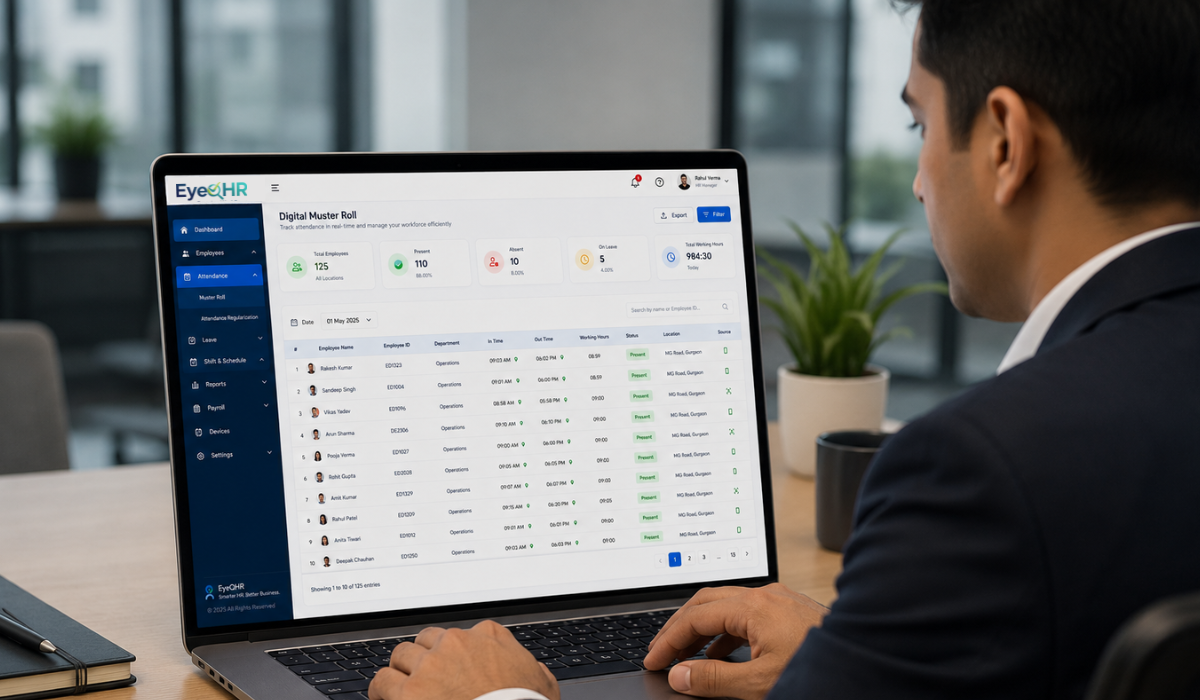
Muster Roll Format India: What It Is, What Goes in It, and How to Maintain It Correctly

Muster Roll Format India: What It Is, What Goes in It, and How to Maintain It Correctly

Every manpower company, labour contractor, and staffing agency that deploys workers under the Contract Labour (Regulation and Abolition) Act, 1970…
Read More

PF and ESI for Contract Workers in India: A Practical Guide for Manpower Companies

PF and ESI for Contract Workers in India: A Practical Guide for Manpower Companies

Provident Fund and ESIC are among the most commonly misunderstood compliance obligations for manpower companies. Not because the rules are…
Read More
What to Look for in an HRMS for Manpower Companies India 2026: The Complete Buyer’s Guide

What to Look for in an HRMS for Manpower Companies India 2026: The Complete Buyer’s Guide

Finding the right HRMS for a manpower company in India is a very different exercise from choosing HR software for…
Read More

How to Run Bulk Payroll for Contract Workers in India: A Step-by-Step Guide

How to Run Bulk Payroll for Contract Workers in India: A Step-by-Step Guide

Running payroll for a fixed workforce of salaried employees is relatively straightforward. Running bulk payroll for contract workers is a…
Read More

Field Employee Attendance Tracking: A Complete Guide for Manpower, Security, and Facility Management Companies

Field Employee Attendance Tracking: A Complete Guide for Manpower, Security, and Facility Management Companies

Ask any HR manager at a manpower company what their most time-consuming problem is, and attendance will come up in…
Read More

Minimum Wage India 2026: State-Wise Updated Rates and Daily Wage Calculation Guide

Minimum Wage India 2026: State-Wise Updated Rates and Daily Wage Calculation Guide

Minimum wage compliance is one of the most consistent pain points for manpower companies, staffing agencies, and any business that…
Read More

CLRA Compliance Checklist for Manpower Companies in India: What You Must Get Right in 2026

CLRA Compliance Checklist for Manpower Companies in India: What You Must Get Right in 2026

Every manpower company in India that deploys contract workers has legal obligations under the Contract Labour (Regulation and Abolition) Act,…
Read More