


10 Signs Your Business Has Outgrown Excel for HR and Payroll Management

Every business starts on Excel. It is free, familiar, and flexible enough for a team of five. But there comes a point when that same spreadsheet becomes the single biggest source of HR headaches in the company. The question is not whether you will outgrow it. The question is whether you will recognize the signs before it costs you.

HR and payroll software is not a luxury for large companies. It is a practical tool for any business that has crossed the threshold where manual HR management costs more than it saves. Here are ten signs you are already there.

1. Payroll Takes More Than a Day Every Month

If your finance team or founder is spending more than one working day calculating salaries, applying deductions, handling arrears, and preparing salary slips, the process has become a problem. Manual payroll for even 25 employees involves dozens of variables: attendance, leaves, overtime, PF, ESIC, TDS, professional tax, and LWF. A spreadsheet handles one variable at a time. Payroll software handles all of them simultaneously.

2. Payroll Errors Are a Regular Occurrence

One wrong formula, one incorrect attendance entry, or one outdated tax rate can result in the wrong salary for every employee in that category. In a manual process, errors compound silently. You discover them when an employee raises a dispute or when a statutory audit flags a discrepancy. With dedicated HR and payroll software, calculations are rule-based and consistent every month.

3. Compliance Deadlines Cause Monthly Stress

PF deposits are due by the 15th. ESIC by the 15th. TDS by the 7th. Professional tax varies by state. LWF contributions have their own schedule. Tracking all of these in a spreadsheet while running the business is a recipe for missed deadlines, penalties, and compliance notices. If your team dreads the last week of every month, that is a sign.

What compliance failure actually costs?

A missed PF deposit attracts interest at 12 percent per annum from the due date. An ESIC filing error can trigger a department inspection. TDS non-compliance leads to disallowance of expenses during tax assessment. These are not hypothetical risks. They are the routine consequences of manual compliance management at scale.

4. Attendance Tracking Is Still Manual or WhatsApp-Based

Registers, Excel sheets, or WhatsApp messages from supervisors are not attendance management systems. They are data collection methods that require a second manual entry step before they become usable. That second step is where errors enter. And if you have field staff or multiple locations, the problem multiplies.

5. Leave Management Happens Through Informal Channels

When employees apply for leave via WhatsApp or verbal requests, there is no audit trail, no balance tracking, and no visibility for managers. Leave management software creates a structured approval process, maintains running leave balances, and integrates leave data directly into payroll so deductions are accurate.

6. You Have No Single Source of Truth for Employee Data

How many active employees do you have right now? What is the current salary of your senior operations manager? If answering these questions requires opening multiple files or asking different people, your employee data is fragmented. An HRMS centralizes all employee records in one place, accessible in seconds.

7. Onboarding and Exit Are Unstructured

A new employee joins, and someone manually creates their payroll entry, attendance profile and explains the leave policy. A departing employee submits a resignation and someone manually calculates their full and final settlement. Each of these steps done manually carries a risk of error or omission that creates legal exposure.

The hidden cost of unstructured onboarding

Poor onboarding experiences are one of the top reasons new employees disengage within the first 90 days. A structured, automated onboarding process signals that the organization is professionally run. That signal matters, especially when competing for talent against larger companies.

8. HR Tasks Are Consuming Founder or Management Time

If you are a founder approving leaves, reviewing attendance, resolving salary disputes, or chasing compliance deadlines personally, your business has a structural problem. HR automation handles these tasks systematically so leadership can focus on customers, product, and growth.

9. You Cannot Generate HR Reports Quickly

Your investor asks for your monthly headcount trend. Your operations head needs overtime hours by department. In a manual system, each report takes hours to compile. In dedicated HR software for SMEs, they take seconds.

10. Your Team Is Growing and HR Complexity Is Scaling With It

Every additional employee adds complexity: one more attendance record, one more salary calculation and one more leave balance. Excel scales linearly with headcount. HR software scales by design. The right time to implement it is before the complexity overwhelms the team, not after.

How EyeQHR Solves Every One of These Problems?

EyeQHR is a cloud-based HR and payroll software built for Indian startups, SMEs, and growing businesses. It automates payroll with statutory compliance built in, tracks attendance via mobile GPS or biometrics, manages leaves with an approval workflow, maintains a centralized employee database, and generates compliance-ready reports in seconds. Setup takes days, not months. No IT team required.

Frequently Asked Questions

Q1. At what company size should I move from Excel to HR software?

A1. Most businesses find that Excel becomes a liability between 15 and 25 employees. At that size, payroll complexity, leave tracking, and compliance obligations exceed what a spreadsheet can reliably manage.

Q2. Is HR software expensive for small businesses?

A2. Modern cloud-based HR software is priced per employee per month, making it affordable even for teams of 10 to 15 people. The cost is typically recovered in the first month through time savings on payroll processing and avoided compliance penalties.

Q3. Can HR software handle Indian statutory compliance automatically?

A3. Yes. Purpose-built Indian HR software like EyeQHR calculates PF, ESIC, TDS, professional tax, and LWF contributions automatically based on each employee’s eligibility. ECR files for EPFO and ESIC contribution data are generated from the same payroll run.

Q4. What happens to our existing employee data when we switch from Excel?

A4. Most HR software platforms support data import from Excel. Employee master data, salary structures, and historical leave balances can be migrated at the start of the financial year or at any point during implementation.

Q5. How long does it take to implement HR software?

A5. For a business with fewer than 100 employees, implementation typically takes 3 to 7 working days. That includes setting up the employee database, configuring salary structures, mapping attendance data, and running a parallel payroll to verify accuracy.

Q6. Will our employees need training to use HR software?

A6. Most modern HR platforms are designed for non-technical users. Employees use a self-service portal for leave applications, payslip downloads, and profile updates. HR managers use an admin dashboard that requires no IT background to operate.

Conclusion

Excel is a starting point, not a long-term HR system. If your business has crossed 15 employees, runs payroll manually, or carries compliance risk because of fragmented records and missed deadlines, the cost of staying on spreadsheets is already higher than the cost of switching. HR and payroll software removes the administrative friction that slows down every part of your business.

Related Posts

How Small and Mid-Sized Businesses Can Save Time and Costs with an All-in-One HRMS?

How Small and Mid-Sized Businesses Can Save Time and Costs with an All-in-One HRMS?

Running a small or mid-sized business in India means wearing many hats. The founder is often the sales head, the…
Read More

How Automated Payroll Software Eliminates Salary Errors and Saves Time

How Automated Payroll Software Eliminates Salary Errors and Saves Time

The average Indian SME running payroll manually makes between 3 and 8 errors per month. Some are minor. Some are…
Read More

I’m the Founder, So Why Am I Still Doing HR? Here’s What It Cost Me

I’m the Founder, So Why Am I Still Doing HR? Here’s What It Cost Me

I started managing HR myself because it seemed simple. Twelve employees. A salary sheet. A leave tracker. Some TDS calculations…
Read More
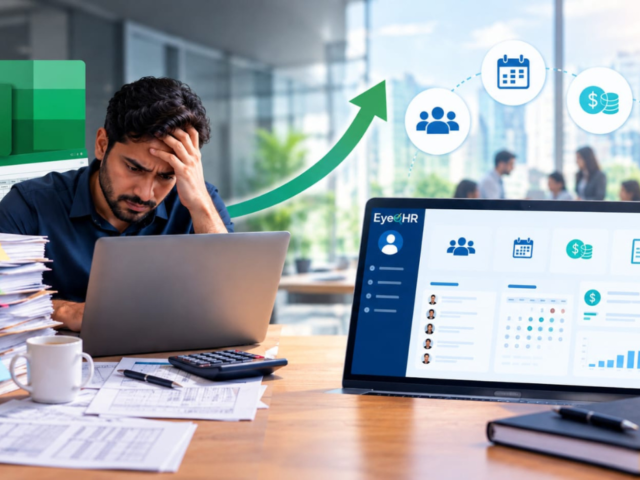
10 Signs Your Business Has Outgrown Excel for HR and Payroll Management

10 Signs Your Business Has Outgrown Excel for HR and Payroll Management

Every business starts on Excel. It is free, familiar, and flexible enough for a team of five. But there comes…
Read More
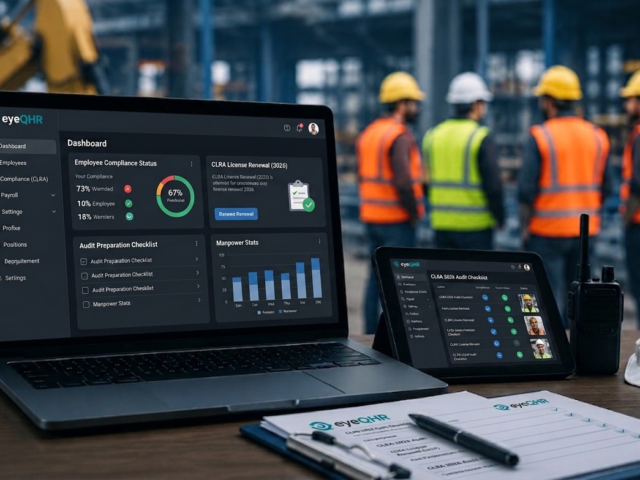
CLRA Compliance in 2026: The Practical Checklist Every Manpower Contractor Must Follow Before the Next Inspection

CLRA Compliance in 2026: The Practical Checklist Every Manpower Contractor Must Follow Before the Next Inspection

A labour inspector can walk into any client site where your workers are deployed. Today, without notice. What they find…
Read More

Payroll Software for Contract Workers: How Bulk Processing Works and Why It Matters for Compliance

Payroll Software for Contract Workers: How Bulk Processing Works and Why It Matters for Compliance

If your payroll team spends three days every month calculating wages for 200 contract workers in a spreadsheet, the problem…
Read More
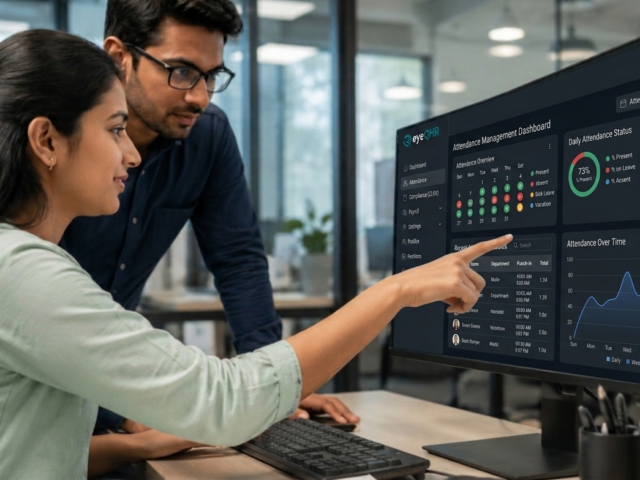
Attendance Management for Manpower Companies: Why Your Current System is Failing You and What to Do About It

Attendance Management for Manpower Companies: Why Your Current System is Failing You and What to Do About It

A security company in Jaipur was managing attendance for 340 guards across 22 client sites using WhatsApp messages and paper…
Read More

Why Contract Labour Management Software is Non-Negotiable for India’s Manpower Industry in 2026

Why Contract Labour Management Software is Non-Negotiable for India’s Manpower Industry in 2026

If you run a manpower company, staffing agency, or security firm in India, you already know that managing contract labour…
Read More

Attendance Management for Manpower Companies: Why Your Current System is Failing You and What to Do About It

Attendance Management for Manpower Companies: Why Your Current System is Failing You and What to Do About It

A security company in Jaipur was managing attendance for 340 guards across 22 client sites using WhatsApp messages and paper…
Read More
Daily Wage and Overtime Calculation for Contract Workers in India: Complete Formula Guide

Daily Wage and Overtime Calculation for Contract Workers in India: Complete Formula Guide

Calculating daily wages and overtime for contract workers sounds straightforward until you actually sit down to do it. The daily…
Read More
Why Contract Labour Management Software is Non-Negotiable for India’s Manpower Industry in 2026

Why Contract Labour Management Software is Non-Negotiable for India’s Manpower Industry in 2026

If you run a manpower company, staffing agency, or security firm in India, you already know that managing contract labour…
Read More
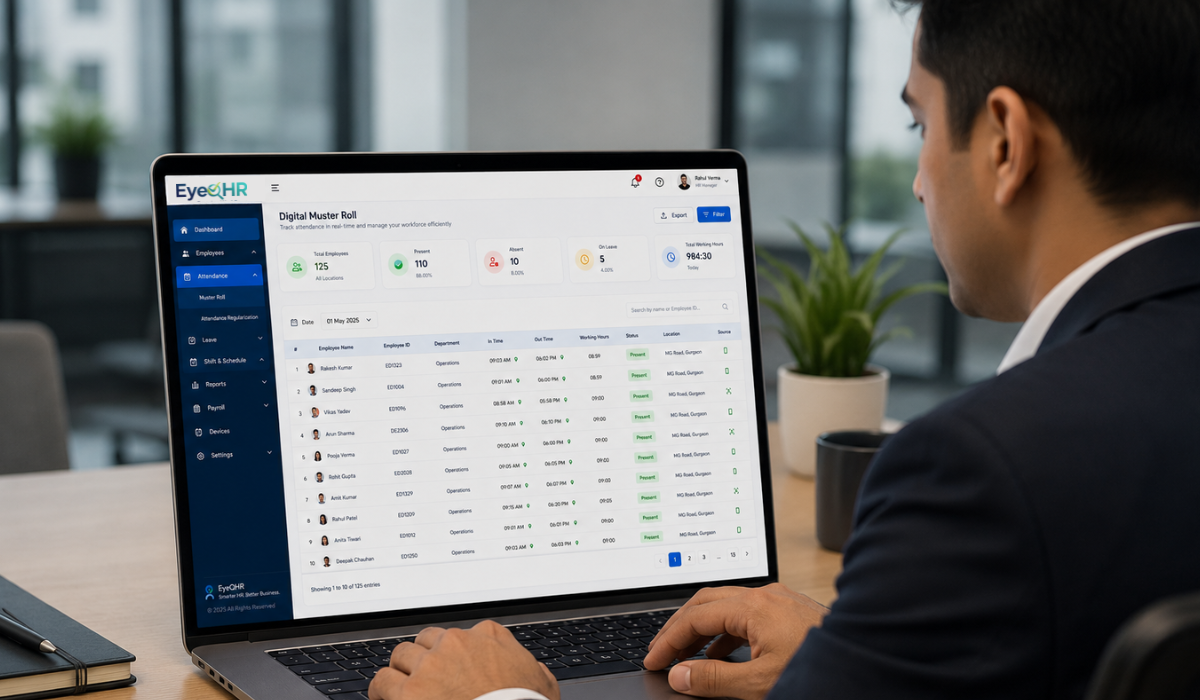
Muster Roll Format India: What It Is, What Goes in It, and How to Maintain It Correctly

Muster Roll Format India: What It Is, What Goes in It, and How to Maintain It Correctly

Every manpower company, labour contractor, and staffing agency that deploys workers under the Contract Labour (Regulation and Abolition) Act, 1970…
Read More

PF and ESI for Contract Workers in India: A Practical Guide for Manpower Companies

PF and ESI for Contract Workers in India: A Practical Guide for Manpower Companies

Provident Fund and ESIC are among the most commonly misunderstood compliance obligations for manpower companies. Not because the rules are…
Read More
What to Look for in an HRMS for Manpower Companies India 2026: The Complete Buyer’s Guide

What to Look for in an HRMS for Manpower Companies India 2026: The Complete Buyer’s Guide

Finding the right HRMS for a manpower company in India is a very different exercise from choosing HR software for…
Read More

How to Run Bulk Payroll for Contract Workers in India: A Step-by-Step Guide

How to Run Bulk Payroll for Contract Workers in India: A Step-by-Step Guide

Running payroll for a fixed workforce of salaried employees is relatively straightforward. Running bulk payroll for contract workers is a…
Read More

Field Employee Attendance Tracking: A Complete Guide for Manpower, Security, and Facility Management Companies

Field Employee Attendance Tracking: A Complete Guide for Manpower, Security, and Facility Management Companies

Ask any HR manager at a manpower company what their most time-consuming problem is, and attendance will come up in…
Read More

Minimum Wage India 2026: State-Wise Updated Rates and Daily Wage Calculation Guide

Minimum Wage India 2026: State-Wise Updated Rates and Daily Wage Calculation Guide

Minimum wage compliance is one of the most consistent pain points for manpower companies, staffing agencies, and any business that…
Read More

CLRA Compliance Checklist for Manpower Companies in India: What You Must Get Right in 2026

CLRA Compliance Checklist for Manpower Companies in India: What You Must Get Right in 2026

Every manpower company in India that deploys contract workers has legal obligations under the Contract Labour (Regulation and Abolition) Act,…
Read More